Knife Blocks vs Magnetic Strips: Where Should Knives Live? review
The knife block is a counter-hogging default that hides your knives and their condition; the magnetic strip stores edges safely, visibly, and takes no counter at all — if you have the wall and hang it properly. In-drawer organisers are the quiet third option nobody advertises.
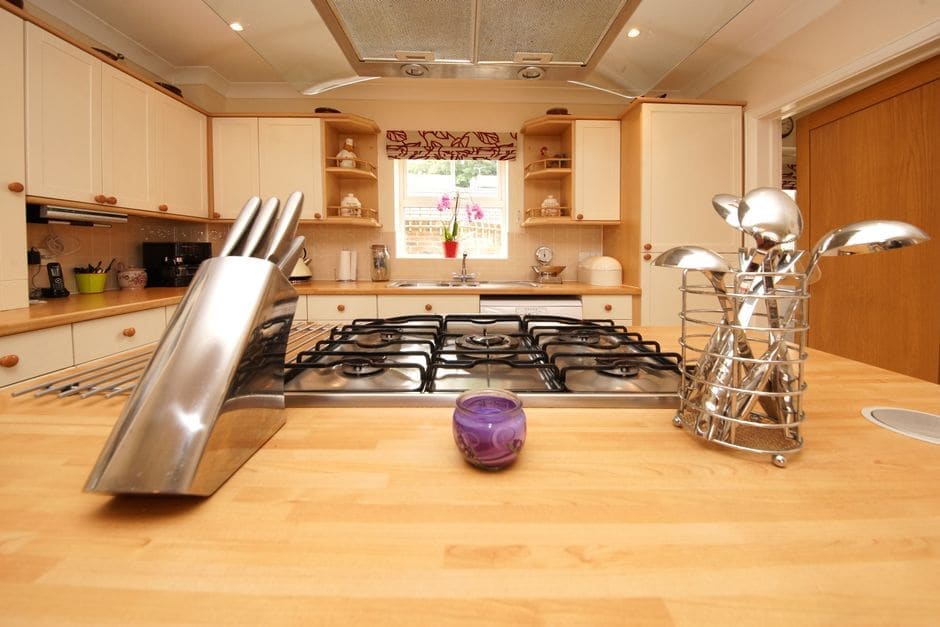
What we like
- Strips free counter space entirely and keep every knife visible
- Edges touch nothing in strip storage — nothing to dull them between uses
- Blocks are self-contained and renter-friendly: no drilling, no landlord
- Drawer organisers protect edges and hide knives from small children
Flaws but not dealbreakers
- Blocks devour counter space and their slots collect crumbs and moisture
- Buying the pre-filled block means paying for knives you'll never use
- Strips require solid mounting and a technique: spine first, then roll
- Cheap weak magnets and heavy knives are a bad combination hanging over anything
Nobody chooses the knife block; it arrives. It comes filled with the knife set someone bought as a milestone gift, plants itself on the counter like furniture, and is never questioned again. Question it: storage affects how long an edge lasts, how safely hands move around the kitchen, and how much of your most valuable workspace a wooden brick is allowed to occupy.
The case against the default is longer than its familiarity suggests. A block claims permanent counter real estate in exchange for storing perhaps a third of its slots' worth of knives you actually use — the pre-filled versions being famously a way to sell five mediocre knives around the two good ones. The slots themselves are deep, dark, unwashable channels where crumbs and moisture settle, and a knife slid in and out of wood-lined slots daily meets more friction than its edge enjoys. None of this is disqualifying; all of it is invisible until pointed out.
The category context lives in our 'Dishwasher Safe': What the Label Actually Promises.
The magnetic strip fixes most of it, with conditions. Mounted properly on a wall or backsplash, it stores knives with their edges touching nothing, keeps every blade visible — which quietly improves both selection and the guilt that leads to sharpening — and returns the counter entirely. The conditions: solid mounting into something structural, magnets strong enough for your heaviest knife, and the small learned technique of laying the spine on first and rolling the edge away, rather than slapping the blade flat. Renters who can't drill, and households where a wall of accessible blades and small children share a room, have legitimate vetoes here.
For the vetoed, the in-drawer knife insert is the unglamorous winner: edges protected in individual slats, counter untouched, blades out of sight and reach. It is the option nobody photographs for a kitchen magazine and the one that suits the most kitchens — particularly rentals, particularly homes with children, particularly anyone whose counter is already losing a war against appliances. Buy the version with individual slots rather than the sheet of foam bristles; the bristle mats look clever and are miserable to clean once anything greasy gets into them.
If you keep the block you already own, two adjustments get most of the benefit without spending anything. Turn it so the slots face slightly downward or sideways if the design allows — knives stored edge-up in a vertical slot rest on their cutting edge, which is the one part you are trying to protect. And pull the whole thing apart for a wash more often than feels necessary; the slots are the least-cleaned surface in most kitchens, and a knife that goes in slightly damp will find that out.
The universal-mount and slotless blocks that have appeared in recent years are a genuine middle path worth knowing about: flexible rods or bristle-free channels that take any blade shape, so you are not paying for slots you never fill. They still eat counter space, which is the block's original sin, but they solve the buy-five-knives-to-get-two problem and the awkward-blade problem in one go.
Whichever home the knives get, the storage habit that outweighs the storage hardware is simple — knives go away clean and dry, and they visit a sharpener when the tomato test says so. A well-kept knife in a humble drawer beats a neglected one displayed like art.
Key specs
- Category
- Knife storage — blocks, magnetic strips, drawer inserts
- Real decision factors
- Counter space, wall space, children, rental drilling rules
- The habit that matters more
- However stored, knives go in clean and dry